About the ICAK

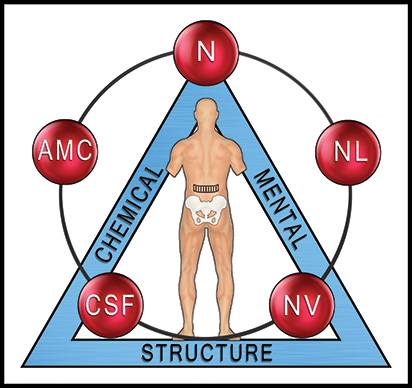
ICAK-USA Triad of Health Logo (2015)

What is the ICAK-USA?

The origin of applied kinesiology is traced back to 1964 when George J. Goodheart, Jr., D.C., first observed that postural distortion was associated with weak muscles. He found that by applying the appropriate therapy, the muscle weakness would resolve, and the postural distortion would disappear.

The International College of Applied Kinesiology® U.S.A (ICAK-USA) was founded in 1976 by Dr. Goodheart and a group of like-minded doctors, most of whom he had appointed as teachers of his work, forming an organization that would take what we know as Applied Kinesiology into the future. 

Originally called “Goodheart Technique,” this designation was rebranded as Applied Kinesiology and the name “International College of Applied Kinesiology” was adopted.

Since its formation as a non-profit corporation, the primary purpose of the ICAK-USA has been to educate doctors and share observations in this amazing field of assessment and therapeutics

The Primary Goal of ICAK-U.S.A.

The primary goal of the ICAK-USA is to provide leadership in applied kinesiology through individual professional development and to advance education in health care. Membership offers recognition and referral, professional identity, and an opportunity for personal development.

Other AK Chapters

In addition to the ICAK-USA Chapter, there are thirteen other ICAK Chapters: Australasia (including Japan), Baltics, Benelux, Brazil, Canada, Germany, France, Italy, Korea, Russia, Switzerland, Ukraine, and the United Kingdom. Learn more here!


What Is Applied Kinesiology?

Applied Kinesiology (AK) is a system that evaluates structural, chemical and mental aspects of health using manual muscle testing combined with other standard methods of diagnosis. AK, a non-invasive system of evaluating body function that is unique in the healing arts, has become a dynamic movement in health care in its relatively short existence.

The combined terms “applied” and “kinesiology” describe the basis of this system, which is the use of manual muscle testing to evaluate body function through the dynamics of the musculoskeletal system. Treatments may involve specific joint manipulation or mobilization, various myofascial therapies, cranial techniques, meridian and acupuncture skills, clinical nutrition, dietary management, counseling skills, evaluating environmental irritants and various reflex procedures.

Applied kinesiology (AK) is a diagnostic system that uses manual muscle testing and other standard methods of diagnosis to evaluate the nervous system’s response to sensory input and challenges via the dynamics of the musculoskeletal system. Treatments may involve various myofascial therapies, cranial techniques, meridian and acupressure skills, clinical nutrition, dietary management, lifestyle and exercise education, evaluating environmental irritants, various reflex procedures, and specific manipulations. Each treatment is individualized for the patient to help restore their health and maintain well being throughout life. AK is a non-invasive system of health care that is unique in the healing arts, and those physicians who practice such system often resolve a patient’s health care dilemma faster and more effectively than traditional methods.” – Dr. Stephen Gangemi, DC, DIBAK

Learn more about the Founder and Father of Applied Kinesiology, Dr. George J. Goodheart, here.

The Triad of Health

Dr. Richard Belli at ICAK International 50th

The triad of health lists the three basic causes of health problems.  They are structural, chemical, and mental, with structure as the base of the triad. Literally, all health problems, whether functional or pathological, are involved with one part or all parts of the triad. This is not new to chiropractic, as its founder, D.D. Palmer states in his text The Science, Art, and Philosophy of Chiropractic, “The determining causes of disease are traumatism, poison, and autosuggestion.” AK enables the doctor to evaluate the triad’s functional balance and direct therapy toward the imbalanced side or sides.

The physician who is aware of the triad of health, and evaluates every patient for all three sides, increases his ability to find the basic underlying cause of a patient´s health problem. AK skills are developed and approved by the International College of Applied Kinesiology Board of Standards.

These skills are refined from many disciplines including chiropractic, osteopathy, medicine, dentistry, acupuncture, biochemistry, psychology, homeopathy, naturopathy, and other healing arts. Members of these professions share knowledge through the publications and conferences of the International College of Applied Kinesiology (ICAK) and its chapters.